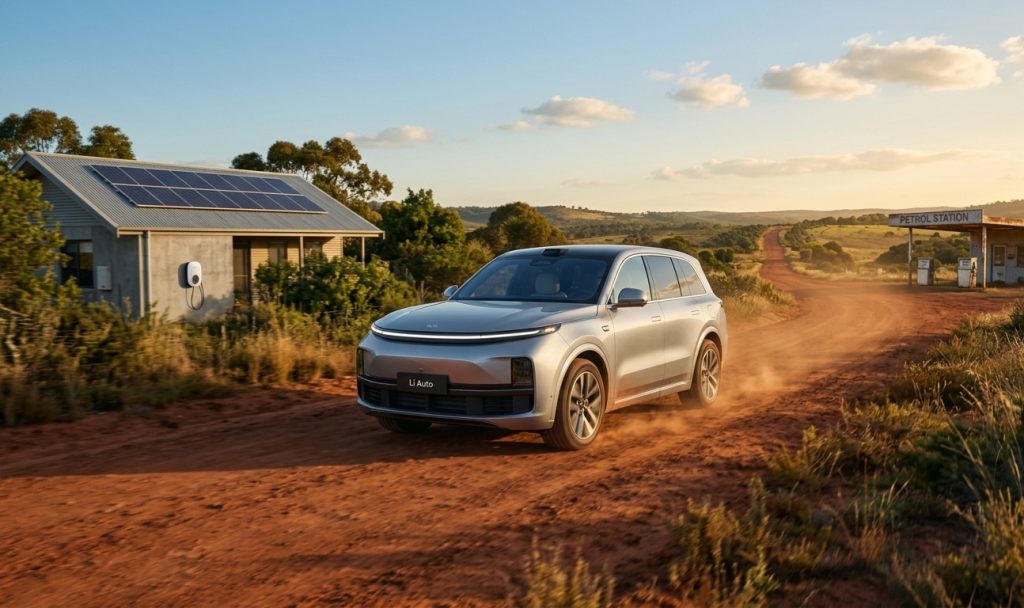
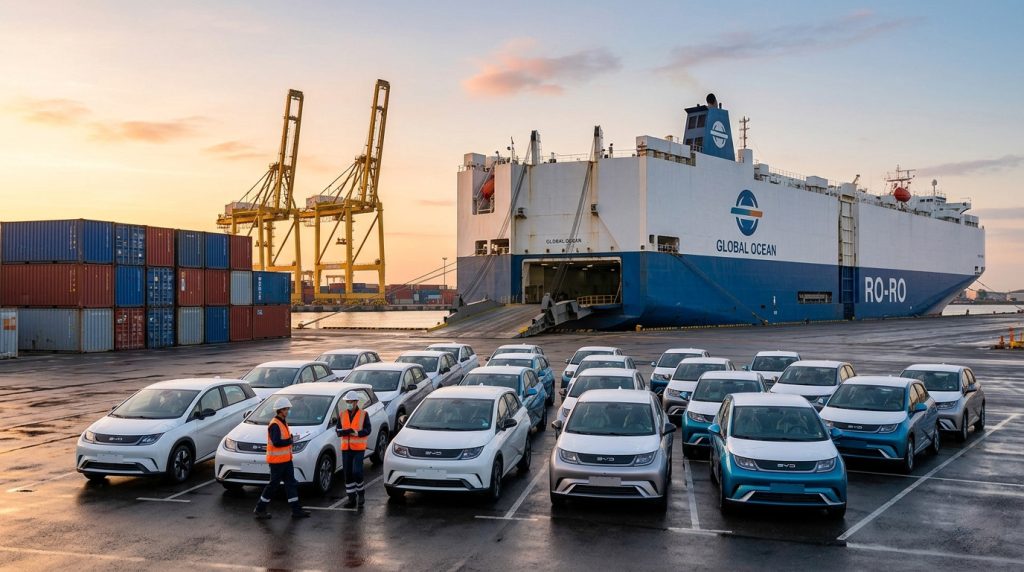
If you run an auto dealership, a fleet leasing company, or you’re simply an entrepreneur looking for the next big opportunity, you have probably noticed a massive shift. For decades, the global automotive supply chain ran from Detroit to Stuttgart to Tokyo. But today? All roads lead to China.
In 2025, China overtook Japan as the world’s largest vehicle exporter, a title it isn’t likely to give back. However, success in this market isn’t just about finding cheap EVs anymore. To successfully import cars from China in 2026, you have to navigate a completely new set of rules. The Chinese government has tightened its belt, moving from encouraging volume to controlling quality.
This guide breaks down the new China car export policy 2026, the step-by-step logistics, and how to avoid costly mistakes.
Understanding the New Export Licenses (The 2026 Policy Update)
In the past, almost any trading company could buy a car in China and ship it overseas. That era is over. As of early 2026, Beijing has implemented a strict licensing system to protect the reputation of “Made in China” vehicles.
The government noticed that damaged, poorly repaired, or substandard vehicles were being dumped into emerging markets, hurting the brand image of manufacturers like BYD, Geely, and Chery. To fix this, the 2026 update introduces three major hurdles.
The 180-day ownership rule for used car exports
One of the biggest changes you will face when you import cars from China is the “cooling-off” ownership rule. Previously, traders would buy a used EV on Monday and ship it on Friday. Now, the export license requires that the vehicle title (registration) remains in the exporter’s name for a minimum of 180 days.
Why does this matter to you? It prevents “fly-by-night” operators from flipping damaged auction cars. For you as an importer, this means you cannot buy a car today and expect it on your dock next month. You need to work with factories or trading companies that have deep inventory and have held those assets for six months. Verify the registration date on the “Motor Vehicle Registration Certificate” before you pay a deposit.
Minimum standards for export enterprises
The China car export policy 2026 has also raised the bar for who is allowed to ship cars. Only enterprises that have sold a minimum of 500 units domestically or have a proven export history of $2 million in the past two years can obtain the new Class-A Export License.
For you, this eliminates 80% of the small brokers found on Alibaba or social media. It forces you to work with serious, capitalized players. If a supplier cannot show you their official “Export Enterprise Qualification Certificate” issued by the Ministry of Commerce in 2026, walk away. They are operating illegally, and your customs broker will seize the vehicle upon arrival.
Step-by-Step Import Process
Assuming you have found a compliant partner, here is the exact workflow to safely import cars from China in the current climate.
1. Vehicle selection and technical spec verification
Do not assume that a car sold in Shanghai is legal in your country. Chinese domestic models often have different frequency bands for keyless entry, different suspension tuning, and different emissions software.
-
Action: Request the “China Compulsory Certification (CCC)” and compare it to your local DOT or EU standards.
-
Pro Tip: Look for “Export Edition” trims. Major manufacturers like Li Auto and Nio now build specific VINs for global markets that bypass these regulatory headaches.
2. Contract signing and payment security (T/T, L/C)
Because the new 180-day rule ties up capital, sellers are demanding more secure payment terms.
-
T/T (Telegraphic Transfer): Usually requires 30%(or 50%) deposit and 70%(or 50%) upon loading.
-
L/C (Letter of Credit): The gold standard for 2026. An Irrevocable Confirmed L/C protects you. The bank only pays the Chinese exporter when they present the “Original Bill of Lading” and proof of the 180-day ownership registration.
3. Applying for the China Export License
This is the step that delays most shipments. Once the vehicle is containerized at ports like Shanghai or Tianjin, the exporter uploads the customs data to the “China International Trade Single Window.”
-
The system verifies the VIN against the 180-day clock.
-
The exporter receives an “Export Customs Clearance Note.”
-
Timeframe: Under the old rules, this took 3 days. Under the 2026 policy, it takes 15-20 working days due to mandatory vehicle inspections at the port.
Why Partner with NextG Automotive?
You might be wondering, “Can I do this myself?” Technically, yes. But practically, the China car export policy 2026 is designed to trip up foreign buyers who don’t speak Mandarin or understand local administrative law.
That is where NextG Automotive becomes your unfair advantage. We are one of the few licensed entities with the new 2026 Class-A license. Here is how we de-risk the process for you:
-
Paperwork Management: We handle the 180-day title escrow. We source vehicles from our own stock that have already aged out of the waiting period, meaning you skip the 6-month delay entirely.
-
Government Compliance: We interface directly with the Chinese Ministry of Commerce to secure your export license number before the ship leaves the port.
-
VIN Whitelisting: We pre-verify all technical specs against your local motor vehicle registry (US, EU, GCC, or ASEAN), ensuring you don’t get stuck with a car you cannot plate.
Navigating the regulatory maze requires a partner with boots on the ground in Guangzhou and legal teams in Beijing. We turn a 90-day headache into a 30-day smooth transaction.
Preparing your business for the 2026 market changes
The days of cheap, fast, unregulated Chinese car flipping are over. The 2026 regulations are a blessing in disguise. By weeding out bad actors, China is ensuring that only high-quality, compliant inventory enters the global supply chain.
To succeed this year, you need patience (for the 180-day clock) and precision (for the new licenses). Do not rush to sign with the first supplier who offers you a “too good to be true” price. Verify their license status, check the ownership dates on the paperwork, and always use an L/C for payment.
The demand for Chinese EVs, hybrids, and commercial trucks is exploding in Africa, South America, and Eastern Europe. Secure your supply chain now.
Ready to secure compliant inventory? Contact NextG Automotive today for a free 2026 compliance checklist and a live quote on your first container load.
Keywords: import cars from China, China car export policy 2026, automotive sourcing China, BYD exporter, Chinese EV import regulations, 180-day ownership rule, export license China, NextG Automotive, used car export China