What is EREV? The Rise of Extended Range EVs Perfect for Developing Infrastructure
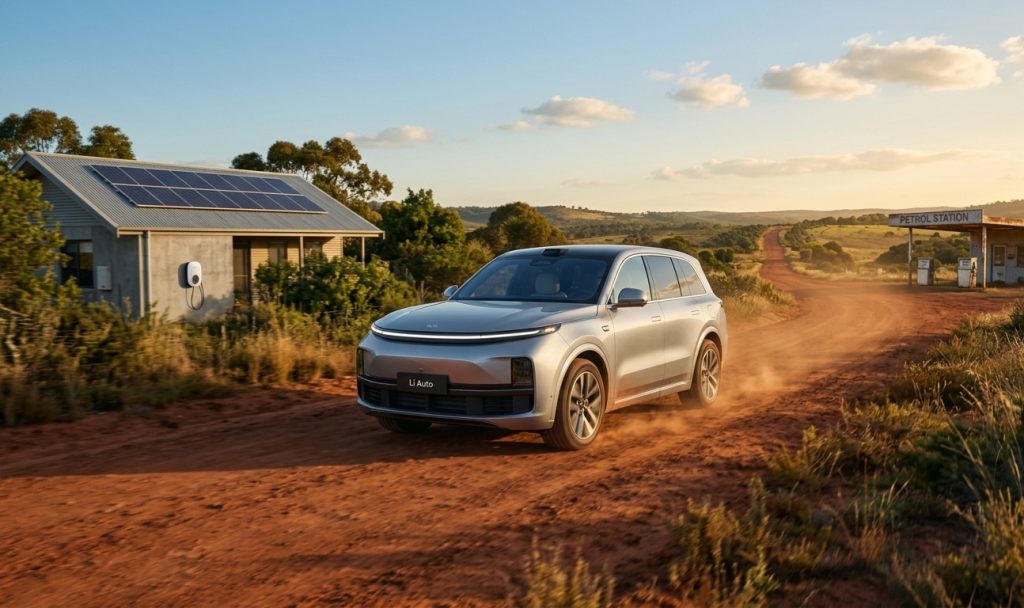
Imagine living in Lagos, Nairobi, or Jakarta. You want an electric car. You love the idea of cheap fuel, instant torque, and zero tailpipe emissions. But then you look around: no charging stations for 200 kilometers. The power grid sometimes fails. Your neighbor bought a pure EV and sold it six months later because he couldn’t drive to see his family during the holidays.
This is the reality of developing infrastructure. And this is exactly why a quiet revolution is happening. It is not called Tesla. It is called EREV.
The Extended Range Electric Vehicle (EREV) is the single most practical electrified vehicle for Africa, Southeast Asia, and South America. It kills range anxiety without requiring a single fast charger. Let me explain why this “Goldilocks” machine is taking over, and why Chinese giants like Li Auto are exporting them by the thousands.
What is EREV? The Simple Definition
Let us answer the obvious question first. What is EREV in plain English?
An EREV is an electric car with a backup generator. The wheels are always driven by an electric motor – just like a Tesla. You get that instant, silent, smooth acceleration. But hidden under the hood is a small gasoline engine. That engine never drives the wheels. Its only job is to recharge the battery when it gets low.
Think of it as a battery-electric vehicle (BEV) that carries its own portable charger.
The result? You drive on pure electricity for your daily commute (typically 150-300 km). That is enough for a week of errands. But when you plan a long road trip across imperfect roads, you simply stop at any gas station, fill up the tank, and keep driving. The generator kicks in automatically. No hunting. No waiting. No anxiety.
For a family in Manila or a taxi driver in Accra, this changes everything.
EREV vs. PHEV vs. BEV: A Technical Comparison for Buyers
Many people confuse these three technologies. If you are spending your hard-earned money, you need to know the difference.
| Feature | BEV (Pure Electric) | PHEV (Plug-in Hybrid) | EREV (Extended Range) |
|---|---|---|---|
| Wheels driven by | Electric motor only | Engine OR motor | Electric motor only |
| Electric range | 300-700 km | 50-100 km | 150-300 km |
| Backup power | None (tow truck) | Weak gas engine | Dedicated generator |
| Driving feel | Smooth | Jerky (switches modes) | Always smooth EV feel |
| Best for | Rich countries with chargers | Short commutes | Developing markets |
A BEV is amazing – if you have a garage charger and a nationwide fast-charging network. Most of Africa and SEA do not.
A PHEV pretends to be green but offers pathetic electric range. Once the small battery dies, you are dragging a heavy, inefficient gas engine. Fuel economy tanks.
An EREV gives you the best of both. Daily electric savings. Unlimited gas backup. No compromises.
Why Li Auto and Voyah Are Leading This Segment
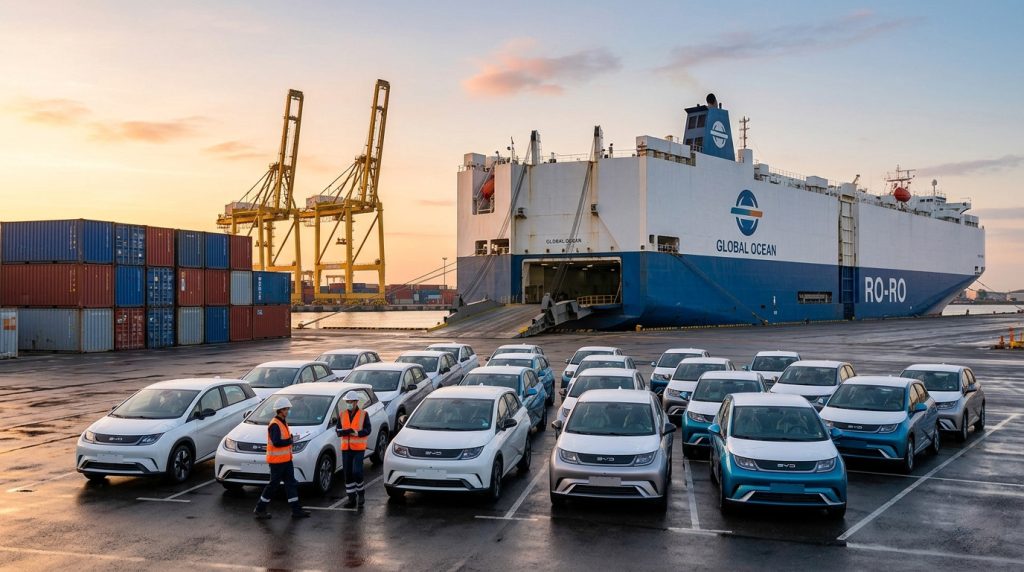
If you search for Li Auto export China news, you will see explosive growth. Li Auto (Li Xiang) became profitable faster than any Chinese EV maker. How? They ignored pure EVs and focused entirely on EREVs.
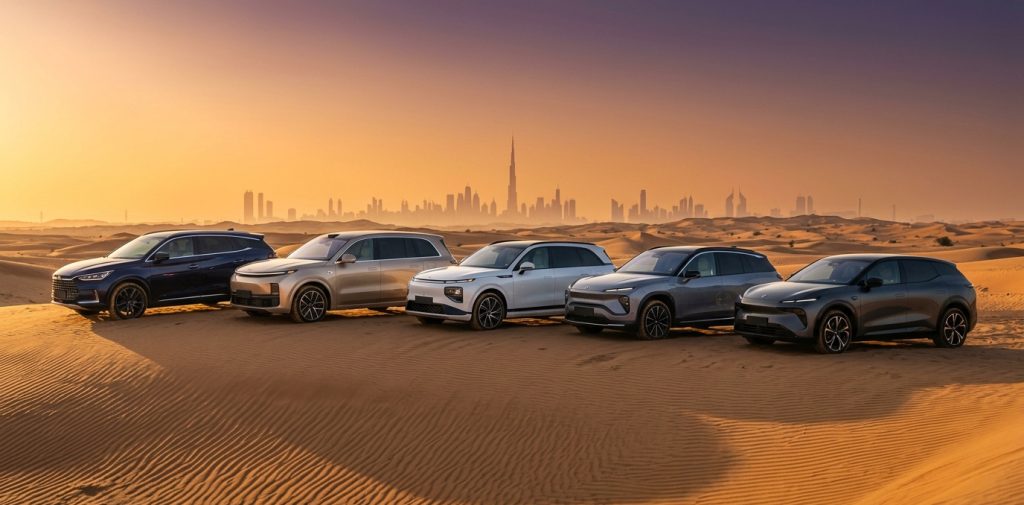
Their L-series SUVs – L6, L7, L8, L9 – are gigantic, luxurious family vehicles. They offer over 1,100 kilometers of total range (battery + generator). In China, they outsell BMW and Audi in the premium segment. Now, they are aggressively exporting to the Middle East, Russia, and Southeast Asia.
Why is this important for you? Because Li Auto is proving that hybrid cars for Africa/SEA do not need to be cheap or ugly. They can be premium, quiet, and powerful.
Voyah (under Dongfeng) is another serious player. The Voyah Free EREV offers luxury interiors, air suspension, and a total range exceeding 860 km. These brands are fighting for the same buyer: someone who wants EV benefits but lives where chargers are rare.
In Thailand, Indonesia, and Vietnam, importers are already bringing these vehicles in. The waiting lists are growing.
Fuel Flexibility + Electric Driving Experience
Here is the secret sauce: fuel flexibility.
Because the engine is only a generator, it does not care about fuel quality as much as a high-performance sports car. It runs at a single, optimal RPM. This means it can handle lower-octane gasoline or even biofuel blends more reliably.
Meanwhile, you enjoy the electric driving experience 100% of the time. No gearbox. No vibration. No diesel clatter. Just pure, silent torque when you press the accelerator.
Regenerative braking works exactly like a pure EV. Every time you slow down in Nairobi traffic, you are putting free energy back into the battery. Brake pads last twice as long. The engine starts so rarely that oil changes are every 20,000-30,000 km.
For a ride-share driver in Ho Chi Minh City, the math is simple: electricity costs 1/5th of gasoline. You drive electric all week. On the weekend, you burn a little gas to visit the countryside. Your fuel bill drops by 70%.
Maintenance and Longevity of EREV Systems
A common fear: “Two systems mean two failures.” Actually, the opposite is true.
The electric motor has almost no moving parts. It is bulletproof. The gasoline generator runs at constant, low stress. It never redlines. It never tows a heavy load up a mountain pass. It just hums.
Real-world data from Li Auto owners shows that the engine runs only 10-15% of total driving hours. The rest is pure electric. That means the engine will easily outlast a conventional car engine by hundreds of thousands of kilometers.
Battery degradation is also slower. In a pure EV, you drain and recharge the battery deeply every day. In an EREV, the software keeps the battery in a 20-80% “happy zone” most of the time. This dramatically extends lifespan.
In hot climates like Africa and SEA, heat kills batteries. But EREVs have smaller, easier-to-cool battery packs. Combined with liquid thermal management, they survive the heat better than large BEV packs.
An EREV will easily last 500,000 km with basic maintenance.
Why EREVs Are the “Goldilocks” Solution for Emerging Markets
Pure EVs are too early. Pure gasoline is too expensive. Traditional hybrids compromise too much.
EREVs are just right.
They do not demand a multi-billion dollar charging network. They do not force you to change your driving habits. They simply fit into your world as it exists today – while slashing your fuel costs and emissions.
For governments in Africa and SEA, EREVs offer a realistic path to electrification without bankrupting the national grid. For families, they offer peace of mind. For businesses, they offer lower operating costs.
The rise of EREVs is not a trend. It is a practical solution to a very real problem. And with brands like Li Auto exporting millions of them, the technology is proven, reliable, and available right now.
Ready to stop worrying about chargers and start enjoying electric driving? Contact us today.
What is EREV, Li Auto export China, hybrid cars for Africa/SEA, EREV vs PHEV, EREV vs BEV, Voyah EREV, extended range electric vehicle, developing markets EV solutions, range anxiety fix, electric generator car, Li Auto L9 Africa, SEA hybrid SUV